The Atlantic recently did a cover story on "What Makes a Great Teacher." Specifically addressing the inner-city context, the article addressed over 20 years of research done by Teach for America, which is releasing it's research this year for the first time.
With Obama's education plan getting underway-- giving over $4 billion to essentially discovering how to create great teachers-- TFA's research is suddenly relevant to the whole country.
What they discovered was that elements traditionally thought to be associated with great teaching-- charisma, high energy, good grades and an ivy league background-- turned out to be non-issues. (for more on this phenomenon check out Fast Company's article on how interviews get in the way of making great hires).
As they looked for patterns, two traits (among others) began to emerge. Previous indicators of 1) Persistence and 2) Improvement.
As all the things that seduce in an interview-- people skills and pedigree-- evaporate what's left is a person's ability to try again when things don't work the first time and a history of taking things as they were and making them better.
This is why grades weren't necessarily a good indicator: just because you got 4.0 your whole career doesn't mean you have a good work ethic (you could just be brilliant). But if your grades went up over time that was a better indicator.
This applies to leaders as well. When we're looking to recruit or hire or thinking about things to develop in potential leaders these two things we might keep in mind:
Do they get back up when they get knocked down? Have they had previous success not just maintaining something but actually making it better?
For development we might ask: how can we help people develop the persistence to constantly figure out a way to make it work (whatever "it" may be) and how can we help people to constantly try and improve whatever environment they may find themselves in?
And of course for ourselves we might ask: do we get back up when we get knocked down? Do we grow and make things better?
The future of our schools rest in the hands of the persistent and creative.
And I add: so does everything else.
Showing posts with label Creativity. Show all posts
Showing posts with label Creativity. Show all posts
Tuesday, March 9, 2010


Tuesday, March 2, 2010
Top 10 TEDtalks.
A few years ago I was introduced to TED. If you don't know by now, TED stands for Technology Entertainment and Design. It represents one of the most explosive and dynamic platforms for cultural change, art and innovation. With a waiting list and a $5,000 price tag to attend (and only if you're invited) TED graciously offers all its talks online for free.
I got to go to TEDxUSC last year and met Chris Anderson (pictured below) the now Rock Star curator for TED and it was an extraordinary experience. (For details on how I embarrassingly got this picture, email me). TED has been a great source of inspiration for me and I wanted to share with you my top 10 talks (thus far!) and a little bit about why each made the list for me. Enjoy!
10. David Gallo - Underwater Astonishments
 Check out minute marker 4:18. The next 60 seconds will blow your mind.
9. Elaine Morgan - We Evolved From Aquatic Apes
I love people who champion the minority opinion. Elaine displays such courage and-- interestingly enough-- insight. Inspiration to challenge the powers-that-be.
8. Barry Schwartz - Our Loss of Wisdom
If you love this talk you'll love Barry's books. This is one of the best talks making a case for values-based leadership rather than rules based.
7. Bill Strickland - Make Change with a Slide Show
A little on the long side, but worth watching 10 minutes of. The only talk as far as I know that is accompanied by music. Simply beautiful and inspiring for anyone who wants to create change in the world.
6. Robert Neuwirth - Shadow Cities
Giving dignity to the "slums" that will be tomorrow's cities. If you want to influence the future you need to understand this trend. Inspired me to skype with a "shadow city" expert in South Africa to learn more.
5. Wade Davis - Endangered Cultures
A speech where prose and poetry become indistinguishable. Begs the question: is it possible to create culture and preserve culture at the same time?
4. Jacqueline Novogratz - A Third Way To Think About Aid
One of the most influential quotes for me came from this talk: "Dignity is more important to the human spirit than wealth."
3. JJ Abrams - Mystery Box
The best talk on storytelling that I've ever heard. As an aspiring (and occasionally inspiring) storyteller I think about this talk often. Plus JJ is hilarious.
2. Elizabeth Gilbert - Nurturing Creativity
The best pragmatic case ever made for a spirituality outside of humanity. The world needs more women communicators and Elizabeth is a great example of what one looks like.
1. Sir Ken Robinson - Schools Kill Creativity
I love education. My parents are amazing educators, as were my parent's parents. I teach at Pepperdine University. Years from now this talk will be referenced as a turning point in how America (and the world) looks at education. Welcome to the future.
I got to go to TEDxUSC last year and met Chris Anderson (pictured below) the now Rock Star curator for TED and it was an extraordinary experience. (For details on how I embarrassingly got this picture, email me). TED has been a great source of inspiration for me and I wanted to share with you my top 10 talks (thus far!) and a little bit about why each made the list for me. Enjoy!
10. David Gallo - Underwater Astonishments
 Check out minute marker 4:18. The next 60 seconds will blow your mind.
9. Elaine Morgan - We Evolved From Aquatic Apes
I love people who champion the minority opinion. Elaine displays such courage and-- interestingly enough-- insight. Inspiration to challenge the powers-that-be.
8. Barry Schwartz - Our Loss of Wisdom
If you love this talk you'll love Barry's books. This is one of the best talks making a case for values-based leadership rather than rules based.
7. Bill Strickland - Make Change with a Slide Show
A little on the long side, but worth watching 10 minutes of. The only talk as far as I know that is accompanied by music. Simply beautiful and inspiring for anyone who wants to create change in the world.
6. Robert Neuwirth - Shadow Cities
Giving dignity to the "slums" that will be tomorrow's cities. If you want to influence the future you need to understand this trend. Inspired me to skype with a "shadow city" expert in South Africa to learn more.
5. Wade Davis - Endangered Cultures
A speech where prose and poetry become indistinguishable. Begs the question: is it possible to create culture and preserve culture at the same time?
4. Jacqueline Novogratz - A Third Way To Think About Aid
One of the most influential quotes for me came from this talk: "Dignity is more important to the human spirit than wealth."
3. JJ Abrams - Mystery Box
The best talk on storytelling that I've ever heard. As an aspiring (and occasionally inspiring) storyteller I think about this talk often. Plus JJ is hilarious.
2. Elizabeth Gilbert - Nurturing Creativity
The best pragmatic case ever made for a spirituality outside of humanity. The world needs more women communicators and Elizabeth is a great example of what one looks like.
1. Sir Ken Robinson - Schools Kill Creativity
I love education. My parents are amazing educators, as were my parent's parents. I teach at Pepperdine University. Years from now this talk will be referenced as a turning point in how America (and the world) looks at education. Welcome to the future.
Tuesday, January 26, 2010
Build Well.
In 1932 a carpenter in the small town of Billlund, Denmark created a toy company of small blocks that children could play with.
The company name was LEGO.
Just about everyone loves LEGOs. My nephews are currently 4 and 2 and they love these little bricks of creative goodness. Over Christmas my parents and my wife Sarah and I got Xander-- the 4-year-old-- the same LEGO set. We got him the same stinkin' toy. Same box. Everything.
He didn't care.
He just wanted to build.
Whether it's sandcastles, playdough, boxes in the closet, constructs (remember those?) or LEGOS, children have this almost compulsive need to build.
For a while I looked at my nephews with a jealous nostalgia. "Those kids are so lucky," I'd say. "They get to play with LEGOS." And my wife will buy me LEGOS every now and then.
But then I realized that when it comes to building, getting older actually makes it better.
We used to only be able to play with little plastic bricks. But as adults we have more resources and opportunity to build.
We used to be able to only make little LEGO cars. But now I have friends who design concept cars for Honda. We used to only be able to build castles in the sand. But now we get to build cities. We used to lead only the stuffed animals or action figures on the living room floor, but today-- if we choose-- we get to lead people into a better future.
The older we get the more we get to really build.
Which made me wonder: what am I building? What thing(s) am I giving my time and energy? What does it mean to live a life that builds well?
Incidentally, the word "LEGO" comes from the Danish phrase "leg godt."
It means "to play well." The latin means "to put things together."
May that be true of our lives as well.
May we put things together. May we play well. May we build.
The company name was LEGO.
Just about everyone loves LEGOs. My nephews are currently 4 and 2 and they love these little bricks of creative goodness. Over Christmas my parents and my wife Sarah and I got Xander-- the 4-year-old-- the same LEGO set. We got him the same stinkin' toy. Same box. Everything.
He didn't care.
He just wanted to build.
Whether it's sandcastles, playdough, boxes in the closet, constructs (remember those?) or LEGOS, children have this almost compulsive need to build.
For a while I looked at my nephews with a jealous nostalgia. "Those kids are so lucky," I'd say. "They get to play with LEGOS." And my wife will buy me LEGOS every now and then.
But then I realized that when it comes to building, getting older actually makes it better.
We used to only be able to play with little plastic bricks. But as adults we have more resources and opportunity to build.
We used to be able to only make little LEGO cars. But now I have friends who design concept cars for Honda. We used to only be able to build castles in the sand. But now we get to build cities. We used to lead only the stuffed animals or action figures on the living room floor, but today-- if we choose-- we get to lead people into a better future.
The older we get the more we get to really build.
Which made me wonder: what am I building? What thing(s) am I giving my time and energy? What does it mean to live a life that builds well?
Incidentally, the word "LEGO" comes from the Danish phrase "leg godt."
It means "to play well." The latin means "to put things together."
May that be true of our lives as well.
May we put things together. May we play well. May we build.
Wednesday, January 20, 2010
Create Change.
Creating change in the world sounds so intimidating, doesn't it?
I mean, where do we start? The problems are so big.
Sometimes because we don't know where to start we never start at all. Sometimes the problem seems so big that we decide to not tackle it.
Granted, this doesn't stop people with genuine courage. But it might stop you sometimes and it certainly has stopped me more times than I'd like to admit.
So here is a 3-step process to get you going in the right direction. Each step is more complicated than it sounds, but this offers a kind of big-picture outline for how things-- almost anything-- gets started.
1. Model what you really are about.
This is the sincerity-o-meter. Before you call anyone to anything you've got to live it yourself. The blood has got to be on your sleeve before others will bleed with you. Take a cue from Ghandi and start volunteering before you ask others to.
2. Invite them into your modeling lifestyle.
Anything worth doing can't be done alone. Especially if you care about making real change rather than just clocking in and having "doing good" on your to-do list. Once you own it, invite others in. What you're doing is important-- it's worth people giving up an hour, or two hours or money or whatever.
3. Challenge them to challenge others.
This is the last step that most people forget and is also the step leaders jump to too quickly. This is where you challenge the people who come with you who are now-- because of you-- modeling themselves something worth giving their lives to-- to bring their friends along side them.
Step one is self-leadership, step two is others-leadership, and step 3 is cultural leadership. It can be you, then one friend and then 5 of you together doing stuff. Or it can be you, then 10 friends and then 100. Or it can be you, then 50 and then 500.
Either way, you have to ask yourself: how much potential do I have to create positive change in the world? It's not about whether you're as talented as so-and-so, it's about what you are capable of creating. What is the size of the wake you are capable of?
It's probably bigger than you think.
So Model. Invite. Challenge.
I mean, where do we start? The problems are so big.
Sometimes because we don't know where to start we never start at all. Sometimes the problem seems so big that we decide to not tackle it.
Granted, this doesn't stop people with genuine courage. But it might stop you sometimes and it certainly has stopped me more times than I'd like to admit.
So here is a 3-step process to get you going in the right direction. Each step is more complicated than it sounds, but this offers a kind of big-picture outline for how things-- almost anything-- gets started.
1. Model what you really are about.
This is the sincerity-o-meter. Before you call anyone to anything you've got to live it yourself. The blood has got to be on your sleeve before others will bleed with you. Take a cue from Ghandi and start volunteering before you ask others to.
2. Invite them into your modeling lifestyle.
Anything worth doing can't be done alone. Especially if you care about making real change rather than just clocking in and having "doing good" on your to-do list. Once you own it, invite others in. What you're doing is important-- it's worth people giving up an hour, or two hours or money or whatever.
3. Challenge them to challenge others.
This is the last step that most people forget and is also the step leaders jump to too quickly. This is where you challenge the people who come with you who are now-- because of you-- modeling themselves something worth giving their lives to-- to bring their friends along side them.
Step one is self-leadership, step two is others-leadership, and step 3 is cultural leadership. It can be you, then one friend and then 5 of you together doing stuff. Or it can be you, then 10 friends and then 100. Or it can be you, then 50 and then 500.
Either way, you have to ask yourself: how much potential do I have to create positive change in the world? It's not about whether you're as talented as so-and-so, it's about what you are capable of creating. What is the size of the wake you are capable of?
It's probably bigger than you think.
So Model. Invite. Challenge.
Wednesday, January 6, 2010
What to do when you can't.
Have you ever felt that way? In a relationship or a job or a task or project? It's definitely not the way we wanted it so we concluded that it will never be the way we want it.
About an hour later it struck me. I said to my friend, "You mentioned earlier that your project will never be what you want it to be..."
He knew where I was going before I even finished. He's brilliant like that.
So he finished my thought, "Yeah, I think what I meant was that I don't know how to make it what I want it to be."
Exactly.
How many times do I turn the phrase "I don't know how" into "I can't"?
"I can't" is so much easier. It's so final. It absolves us of all responsibility. After all-- if you can't do it why should you be expected to?
"I don't know how" on the other hand hints at possibility. "I don't know how" means that you can ask someone else. It means you might be able to learn. It means there could be brighter days.
For my friend, surely there were people he could ask who are wiser than he or have done what he wants to accomplish. Surely there's a solution to his problem. Surely there are solutions to my problems, too.
So what are the "I cant's" or "It won'ts" in your life? What if we re-examined those "cant's" and started asking "What if I could but I just don't know how yet?" What could that do for our jobs, family, or community?
Monday, September 28, 2009
Risk Away...
Ever been bored in a classroom? Ever been in a lengthy intellectual discussion and have wanted to scream, “Yes, but what does this have to do with anything?!” Ever had a great idea but never acted on it? Ever want to do something...anything to make life interesting, but then got distracted by the million other things you needed to do?
 Ever feel like you've forgotten how to dream?
These were the questions that formed a month-long experiment with 20 college students at Pepperdine University last year. We got together once a week for four weeks and answered one— and only one— question: what’s one risk we can take this week to make the world a better place? Some people engaged in hard conversations, long overdue. Others gave money away. Some wrote songs and sang them to girlfriends. Others moved forward in their dreams for their future careers. We laughed a lot (the risks didn’t always go as planned). We cried some (some risks went better than we had hoped).
All of us grew.
And Sparks were born.
Sparks are clusters of friends who add just a little more proactivity and healthy risk to their social circles.
They meet once a week. 4 weeks. For 1 hour. 1 question:
What's one risk you can take this week to make the world a better place?
Right now there are 8 new Sparks starting in Malibu, CA. 4 starting near Marina Del Rey. 2 starting in Whittier. One starting in Westwood and one starting in Pasadena.
For help in starting your own Spark with some of your friends email me at jason@mosaic.org.
Check out other risks from the Pepperdine Spark last year as well as other thoughts on risk at http://riskaway.blogspot.com
Risk away.
Ever feel like you've forgotten how to dream?These were the questions that formed a month-long experiment with 20 college students at Pepperdine University last year. We got together once a week for four weeks and answered one— and only one— question: what’s one risk we can take this week to make the world a better place? Some people engaged in hard conversations, long overdue. Others gave money away. Some wrote songs and sang them to girlfriends. Others moved forward in their dreams for their future careers. We laughed a lot (the risks didn’t always go as planned). We cried some (some risks went better than we had hoped).
All of us grew.
And Sparks were born.
Sparks are clusters of friends who add just a little more proactivity and healthy risk to their social circles.
They meet once a week. 4 weeks. For 1 hour. 1 question:
What's one risk you can take this week to make the world a better place?
Right now there are 8 new Sparks starting in Malibu, CA. 4 starting near Marina Del Rey. 2 starting in Whittier. One starting in Westwood and one starting in Pasadena.
For help in starting your own Spark with some of your friends email me at jason@mosaic.org.
Check out other risks from the Pepperdine Spark last year as well as other thoughts on risk at http://riskaway.blogspot.com
Risk away.
Monday, September 21, 2009
Here's to You!

Ever notice how innovation seems to come out of nowhere?
We're just minding our own business when BAM!
Iphone. (Thanks, Steve Jobs!)
I'm just walkin' down the street and POW!
Reality TV. (Thanks?)
I turn 13-years-old and HAPPY BIRTHDAY!
Internet. (Thanks, Al Gore!)
But none of these were a spontaneous combustion of something completely new. They all evolved from something else.
Often times innovation seems spontaneous because all the forms before it were too much like something else (and therefore not viewed as innovative). The train wasn't a train. It was a iron horse. The car wasn't a car. It was a horseless carriage. How many smart phone prototypes were there before the category of "smart phone" became a category? Yet the people making "fancy phones" or more likely "phones that can do things no one needs a phone to do" were innovating years and sometimes decades before the innovation hits our palms.
99% of innovation is never heard of. Which means 98% of innovators are unsung heroes.
So here's to the people who invented the touch screen phone no one wanted so Steve could create the one people did.
Here's to the people who invented the horseless carriage, the car with wings, the iron horse, the calculator that filled a room, and government electronic communication. You didn't realize it: but you made the car, the plane, the train, the computer and the internet.
Here's to every professor who's given away an idea to a student who knew what to do with it. Here's to every bad idea that gave way to a good one, to every self-published book that inspired a best-seller. To every bad song that yeiled a greatest hit and to every innovator that can only find success in the success of the charismatic baking their half-baked ideas.
Here's to you.
Wednesday, September 9, 2009
Harold vs Dexter
"Don't ask yourself what the world needs; ask yourself what makes you come alive. And then go and do that. Because what the world needs is people who have come alive"
- Harold Whitman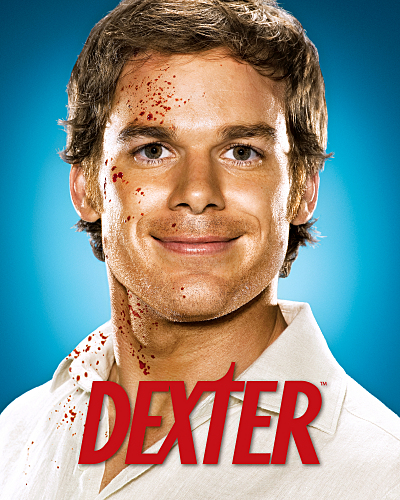
When I first read this quote something stirred in me. Something shifted in my heart and there was a deep voice in my soul that said "Yes!" It was almost like I could feel my spirit expand within me and I felt a surge of energy and excitement.
And then I watched an episode of Dexter and had second thoughts.
Killing people makes Dexter come alive (at least in the first season). While this makes for great television (my friend is a writer on the show) it begs a bigger question...
"Don't ask what the world needs. Ask yourself what makes you come alive and then go and do that..."
I doubt Harold would give the same advice to Dexter. Or, more likely, Harold would expand the conversation to discuss how killing people doesn't really make Dexter come alive. He'd probably say that there's something more to life than Dexter has discovered.
And thus starts the dialogue:
What does it mean to be fully alive?
And do we ask ourselves the same question Dexter should when we read Harold's quote?
I mean, sure, we're not murderers. So at least we have that going for us.
And I know that it's possible for me to be fully alive being a writer, or an executive or teacher or musician...
...or is it?
Is there something more to life than doing what you love?
Because it seems like Harold's quote was penned far from adults who can't read because they've never been to school. My sense is that this quote was conceived in another world where no one dies from dehydration, curable disease or malnutrition. It has become famous in a culture where most can read, most have plenty to eat and most will die of old age.
This quote is on t-shirts, bumper stickers and religious books in this land where the most common form of suffering is experienced by the lonely artist, the apathetic student or the bored businessman.
Now, I know existential suffering is hard. It's hard for everyone. But could it be that the cure for our existential pain isn't simply to do what we love, but to become a humanity which loves people more than what we do?
What I still love about Harold's quote is that it gives people hope that life is possible. We need people to remind us of that. We need that stirring in our hearts that life can be incredibly rewarding, fulfilling and vibrant.
And perhaps there is no greater thrill than doing what we love.
But we also need people to remind us that there is more to life than finding our bliss, and that it's possible for us-- all of us-- to find our bliss by meeting the needs of others.
Maybe what the world needs, more than for you to come alive...
Is for you to become the kind of person who's alive by meeting the needs of the world.
- Harold Whitman
When I first read this quote something stirred in me. Something shifted in my heart and there was a deep voice in my soul that said "Yes!" It was almost like I could feel my spirit expand within me and I felt a surge of energy and excitement.
And then I watched an episode of Dexter and had second thoughts.
Killing people makes Dexter come alive (at least in the first season). While this makes for great television (my friend is a writer on the show) it begs a bigger question...
"Don't ask what the world needs. Ask yourself what makes you come alive and then go and do that..."
I doubt Harold would give the same advice to Dexter. Or, more likely, Harold would expand the conversation to discuss how killing people doesn't really make Dexter come alive. He'd probably say that there's something more to life than Dexter has discovered.
And thus starts the dialogue:
What does it mean to be fully alive?
And do we ask ourselves the same question Dexter should when we read Harold's quote?
I mean, sure, we're not murderers. So at least we have that going for us.
And I know that it's possible for me to be fully alive being a writer, or an executive or teacher or musician...
...or is it?
Is there something more to life than doing what you love?
Because it seems like Harold's quote was penned far from adults who can't read because they've never been to school. My sense is that this quote was conceived in another world where no one dies from dehydration, curable disease or malnutrition. It has become famous in a culture where most can read, most have plenty to eat and most will die of old age.
This quote is on t-shirts, bumper stickers and religious books in this land where the most common form of suffering is experienced by the lonely artist, the apathetic student or the bored businessman.
Now, I know existential suffering is hard. It's hard for everyone. But could it be that the cure for our existential pain isn't simply to do what we love, but to become a humanity which loves people more than what we do?
What I still love about Harold's quote is that it gives people hope that life is possible. We need people to remind us of that. We need that stirring in our hearts that life can be incredibly rewarding, fulfilling and vibrant.
And perhaps there is no greater thrill than doing what we love.
But we also need people to remind us that there is more to life than finding our bliss, and that it's possible for us-- all of us-- to find our bliss by meeting the needs of others.
Maybe what the world needs, more than for you to come alive...
Is for you to become the kind of person who's alive by meeting the needs of the world.
Tuesday, August 18, 2009
No Need for Heroes
I don't need a lot of things.
Yogurt? Don't need it. Coffee? Nope.
And if you were to ask, I suppose I would say I don't "need" to be, you know, stronger.
Now, I'm pretty thin. I'm not much help in times of manual labor but I'll do what I can. If I were alive 10,000 years ago my genes would have died with me.
I say I don't need to be stronger, but that's because I'm not living a life that requires me to be stronger. I go to meetings, I write a lot, I go to films, out to eat, I like to travel. Occasionally I like to embarrass myself by playing basketball with my boss. None of these things require a particular degree of strength.
Lifting cars doesn't particularly excite me. Being more helpful on moving day does, but not enough for a $1,000 annual membership to a gym.

I manage my life with the amount of strength that I already have.
After all, it's not like I'm a superhero or something.
In the class I teach at Pepperdine we spend some time talking about heroes.
Whenever the subject comes up it's always a little embarrassing for me. While I have many heroes (and not just my dad-- although he's at the top of the list) I've discovered that a lot of people, especially the older they get, don't have a lot of heroes.
I had one student say to me, "Why should I need a hero?"
And I suppose we don't. Just like I don't need to get stronger.
On the other hand, if I dream of a life that requires a stronger me, then that's who I'll need to become to create the life I want to live.
The same is true for heroes.
After all, what do heroes do? I mean, they inspire us. They give us a picture of ourselves that we could become.
And, unlike a membership to the gym, having heroes are free.
But those things are only valuable if we're desiring to grow. Heroes only appear to us when we have the humility to admit that others are farther down the road than we are. They help us create a better future.
Could that be why there are so few heroes for us today? Not because we don't need them, but because we haven't yet found the dreams for our lives that demand them?
For while we may have no need for heroes, the world most certainly does.
Yogurt? Don't need it. Coffee? Nope.
And if you were to ask, I suppose I would say I don't "need" to be, you know, stronger.
Now, I'm pretty thin. I'm not much help in times of manual labor but I'll do what I can. If I were alive 10,000 years ago my genes would have died with me.
I say I don't need to be stronger, but that's because I'm not living a life that requires me to be stronger. I go to meetings, I write a lot, I go to films, out to eat, I like to travel. Occasionally I like to embarrass myself by playing basketball with my boss. None of these things require a particular degree of strength.
Lifting cars doesn't particularly excite me. Being more helpful on moving day does, but not enough for a $1,000 annual membership to a gym.
I manage my life with the amount of strength that I already have.
After all, it's not like I'm a superhero or something.
In the class I teach at Pepperdine we spend some time talking about heroes.
Whenever the subject comes up it's always a little embarrassing for me. While I have many heroes (and not just my dad-- although he's at the top of the list) I've discovered that a lot of people, especially the older they get, don't have a lot of heroes.
I had one student say to me, "Why should I need a hero?"
And I suppose we don't. Just like I don't need to get stronger.
On the other hand, if I dream of a life that requires a stronger me, then that's who I'll need to become to create the life I want to live.
The same is true for heroes.
After all, what do heroes do? I mean, they inspire us. They give us a picture of ourselves that we could become.
And, unlike a membership to the gym, having heroes are free.
But those things are only valuable if we're desiring to grow. Heroes only appear to us when we have the humility to admit that others are farther down the road than we are. They help us create a better future.
Could that be why there are so few heroes for us today? Not because we don't need them, but because we haven't yet found the dreams for our lives that demand them?
For while we may have no need for heroes, the world most certainly does.
Monday, August 3, 2009
On passion.
"I'm passionate about so many things."
I hear this phrase a lot. Especially with people in their 20s.
We are the generation cursed with endless opportunity. 500 years ago if my last name was Builder I'd be a builder. If my name was Spears that's probably what I would make for a living.
But our names no longer shape who we will become, and it seems as though the sky is the limit when it comes to what we could do with our lives.
It's a time of amazing privilege. And it's an incredible annoyance.
 Consequently we are the generation that is "passionate about so many things." But I don't think we mean it when we say it. What we usually mean is that we have the potential to be passionate about a lot of things...but we haven't decided what those things are going to be.
And while waiting for something to be passionate about we're passionate about nothing...not even figuring out what to be passionate about.
The word "passion" is an interesting word. I think when we use it most of the time we use it in the sense that we're interested in something, or that something energizes us or that we enjoy it.
In this sense people can be passionate about yogurtland and urban outfitter sales, nice cars and new iphones.
But this is only half of meaning of "passion."
The word "compassion" means literally "to suffer with." The word "passion" means simply "to suffer."
"The Passion of the Christ" is the narrative of the final hours of Jesus' life as he is executed by the Roman government.
Parents, almost all parents, are passionate about their kids. Children bring parents such joy and they require such great sacrifice. Gandhi was passionate about Indian independence. Martin Luther King, Jr. was passionate about Civil Rights and, later, the politics surrounding the Vietnam War. Children, Independence, Civil Rights, Peace. These are all things they suffered for. These were things they were passionate about.
Artists are passionate about art. Composing, writing, painting and dancing-- while all in some sense euphoric and pleasurable-- are also acts akin to giving birth. Sometimes creating just hurts.
You know you're passionate about something when you're willing to suffer for it.
So most of us aren't "passionate about a lot of things." That will only come once we have the courage to sink our teeth into something.
The world is full of causes worthy of our full devotion. Pick one and go.
I hear this phrase a lot. Especially with people in their 20s.
We are the generation cursed with endless opportunity. 500 years ago if my last name was Builder I'd be a builder. If my name was Spears that's probably what I would make for a living.
But our names no longer shape who we will become, and it seems as though the sky is the limit when it comes to what we could do with our lives.
It's a time of amazing privilege. And it's an incredible annoyance.
Consequently we are the generation that is "passionate about so many things." But I don't think we mean it when we say it. What we usually mean is that we have the potential to be passionate about a lot of things...but we haven't decided what those things are going to be.And while waiting for something to be passionate about we're passionate about nothing...not even figuring out what to be passionate about.
The word "passion" is an interesting word. I think when we use it most of the time we use it in the sense that we're interested in something, or that something energizes us or that we enjoy it.
In this sense people can be passionate about yogurtland and urban outfitter sales, nice cars and new iphones.
But this is only half of meaning of "passion."
The word "compassion" means literally "to suffer with." The word "passion" means simply "to suffer."
"The Passion of the Christ" is the narrative of the final hours of Jesus' life as he is executed by the Roman government.
Parents, almost all parents, are passionate about their kids. Children bring parents such joy and they require such great sacrifice. Gandhi was passionate about Indian independence. Martin Luther King, Jr. was passionate about Civil Rights and, later, the politics surrounding the Vietnam War. Children, Independence, Civil Rights, Peace. These are all things they suffered for. These were things they were passionate about.
Artists are passionate about art. Composing, writing, painting and dancing-- while all in some sense euphoric and pleasurable-- are also acts akin to giving birth. Sometimes creating just hurts.
You know you're passionate about something when you're willing to suffer for it.
So most of us aren't "passionate about a lot of things." That will only come once we have the courage to sink our teeth into something.
The world is full of causes worthy of our full devotion. Pick one and go.
Cellphones and Hand Grenades
Watch the two 60-second videos below. One is a commercial for a Israeli phone company where a bunch of soldiers play soccer with Palestinians on the other side of the separation barrier. The other is a spoof of the commercial used with real footage of a group of Palestinians who actually tried kicking a soccer ball across the real fence. It's my first experience seeing actual footage of tear gas and grenades.
My first thought that the spoof was tragically hilarious. And if the short film wasn't created by a company more committed to selling phones than creating peace, then of course it would have seemed more sincere.
But either way, both shorts represent what art can be at it's best: a picture of what we hope the future will be and a picture of how the world really is. Vision and Reality. Hope and Sobriety.
It's also a picture of the prophetic role artists can play in culture: helping us see things as they really are and inspiring hope that they don't have to stay that way.
Imagine the day when vision and reality become the artist's paintbrush not simply to sell phones, but to lead a community or city or country out of the world as we know it and into a world we could barely dream of.
There are a few already creating this world. We need more. See one community of artists' attempts here.
My first thought that the spoof was tragically hilarious. And if the short film wasn't created by a company more committed to selling phones than creating peace, then of course it would have seemed more sincere.
But either way, both shorts represent what art can be at it's best: a picture of what we hope the future will be and a picture of how the world really is. Vision and Reality. Hope and Sobriety.
It's also a picture of the prophetic role artists can play in culture: helping us see things as they really are and inspiring hope that they don't have to stay that way.
Imagine the day when vision and reality become the artist's paintbrush not simply to sell phones, but to lead a community or city or country out of the world as we know it and into a world we could barely dream of.
There are a few already creating this world. We need more. See one community of artists' attempts here.
Wednesday, May 13, 2009
??? = Fun
 Yesterday I was playing with my nephew, Xander.
We were in my parent's backyard (aka the Indian Ocean). The swing was a pirate ship. The dog was a dolphin. The evergreen tree was a Japanese commerce ship that couldn't carry weapons until an amendment to archaic laws crawled its way through their sluggish democracy.
(Who says you can't do current events and play at the same time?)
Needless to say, we were the pirates. And we do what all Somalian pirates do:
We make up songs that go to "A Pirates Life for Me."
As we were getting into the 32nd verse, I started to explain to him what it was like for me to play in the back yard when I was a kid.
"The trees were smaller...and there were no fences. So the ocean was like, 50 times bigger."
"Whoa," says Xander.
Whoa indeed. "A PIRATE'S LIFE FOR ME!!"
One time for a date with the lady who is now my wife, I bought a kids board game and some legos. Now, that might not sound very romantic...but it was totally awesome. I think she had a good time...and I KNOW I did.
YO HO.
And it reminded me of when I was a kid. When I was a kid, we made cross-bows out of legos. We rode our bikes for miles without touching the handle bars and we made (really bad and rarely finished) short films (complete with Miles Davis soundtracks).
In short: we played. We played a lot.

And I was wondering why I don't play as much anymore.
When was the last time we played? When was the last time we left the edit button behind and spontaneously sang whatever came to our minds?
My roommates (before I got married) would unexpectedly burst into song when one of us was in the shower while the other two got ready to go...wherever it was we might be going. Mostly Oldies. It was awesome.
I listen to NPR a lot...but sometimes I just gotta put on John Mayer Trio and turn my steering wheel into a drum set and the stopped traffic on the 110 into a captive audience.
Recently I got to write and direct two short films. I gotta be honest: I have not had that much fun in a long time. I mean, my job is a lot of fun. But storyboards, working with amazing people, laughing, telling stories. It was fun.
Legos with my wife = fun.
Short films with friends = fun.
Improv Pirate songs with my nephew = fun.
What goes on your list? And how can you add to it and live with it more often?
Subscribe to:
Posts (Atom)

 Posts
Posts

