A study on NPR a few months ago noted that in a classroom, children with disruptive behavior have more influence in the class than students who behaved.
If you removed behaving students from the class it made no difference whatsoever in the learning environment.If you removed children who disrupt, however, it turned the class into an unstable state—often times in a negative way.
Typically we teach kids to behave, not to create.
Yet sometimes it’s better to be disruptive than to behave.
As a leader, who do you look to as emerging leaders?Do you look for the ones who behave or for the ones who disrupt?
Often times during the darker days of grad school when I would try to preserve my sanity during particularly boring lectures (which I, now a professor myself, have given my fair share of) I would load up the Apple "Think Different" commercial on my desktop and watch it over and over and over again.
I love this ad. In inspires me every time I watch it.
"Here's the crazy ones..." I'm glad they hired Richard Dreyfus to rock the narration. If you think about it, the whole commercial is a sort of toast-- like at a wedding or an awards ceremony.
We raise our glasses to genius. We raise our glasses to innovation, to strength, to the boldness and courage of the iconoclastic spirit.
And then, at the end, if our glasses are still raised, we've raised them to Apple Inc.
The message, of course, is Think Different.
And while you're thinking different: buy Apple.
Now, I'm an Apple guy. My wife sports the iphone. I'm typing this blog on a MacBook and an older iBook is in the corner of our house. I'm a fan of quality (when I can afford it) and Apple delivers.
But this blog isn't about Apple. It's about marketing and the fluid nature of our own perceptions of our needs.
The marketing industry has evolved immensely over time. In the past, the goal of marketing was to accurately describe products in a message with the hopes that people who needed those products would intercept that message and buy the product. The emphasis was placed on where and when your message was located. Exposure was the main point.
For example, if you sold coffee, you wanted everyone to know you sold coffee. You'd probably make a sign that said "COFFEE." And people who wanted coffee would come to your store.
Of course, after a while 3 guys down the street would open up their own coffee shops. Now this "COFFEE" sign just doesn't get it done. So you have to distinguish yourself from other coffees. There are lots of ways to do this: price, ingredients, etc. But there's one way that's different from all the rest. Maybe you decide to call your coffee "the best." There's no way to prove this, right? And what does that even mean? So you make a sign that says, "World's Best Coffee."
But it goes even further than this, which brings us back to our Think Different ad. This ad, if you're like me, connects to something very profound. It connects to the essence of the human spirit-- our need for progress and to do something great with our lives. If you're like me, you watch this ad and think, "I love greatness." And watching it may even make you want to be great, too.
But this ad isn't really an ad for greatness. It's really an ad for a computer company in Northern California. At best, you could say it's an advertisement for greatness brought to you by Apple. The shift is subtle. But the (not so) obvious point is to get all those feelings of optimism, strength, and rebelliousness to connect with the computer company in Northern California. That's why they paid millions of dollars to create and distribute this commercial.
The point of advertising anymore isn't exposure, it's love. And it isn't for you to love a product. It's for you to experience the emotion of love and associate it with that product.
This is a problem: when marketing strays from the product and becomes a product in and of itself. Marketing then moves from helping to advertise something that could meet your needs (or wants) and becomes a tool to create needs and wants.
And the problem increases when the best, most creative marketers and advertisers give their lives to selling computers, average movies, nylons and deodorant.
Imagine a world where our consumer appetites are so healthy that we create a new economy based on compassion instead of mere capital.
Imagine a world where the giants of business shift and buckle not at the cost of people but in order to better serve them. Not because of legislation or incentives but because of love.
Who will create this world?
Where are the bold, brave storytellers of tomorrow who align themselves with values rather than products, who desire to create better worlds not just fancier ones? Where are the people who, while they work for Apple, really do think different and ask the hard questions, take the admirable risks and live lives not of quiet desperation but passionate activism?
For a beautiful synergy of values and marketing check out www.values.com
Ever been bored in a classroom? Ever been in a lengthy intellectual discussion and have wanted to scream, “Yes, but what does this have to do with anything?!” Ever had a great idea but never acted on it? Ever want to do something...anything to make life interesting, but then got distracted by the million other things you needed to do? Ever feel like you've forgotten how to dream?
These were the questions that formed a month-long experiment with 20 college students at Pepperdine University last year. We got together once a week for four weeks and answered one— and only one— question: what’s one risk we can take this week to make the world a better place? Some people engaged in hard conversations, long overdue. Others gave money away. Some wrote songs and sang them to girlfriends. Others moved forward in their dreams for their future careers. We laughed a lot (the risks didn’t always go as planned). We cried some (some risks went better than we had hoped).
All of us grew.
And Sparks were born.
Sparks are clusters of friends who add just a little more proactivity and healthy risk to their social circles.
They meet once a week. 4 weeks. For 1 hour. 1 question:
What's one risk you can take this week to make the world a better place?
Right now there are 8 new Sparks starting in Malibu, CA. 4 starting near Marina Del Rey. 2 starting in Whittier. One starting in Westwood and one starting in Pasadena.
For help in starting your own Spark with some of your friends email me at jason@mosaic.org.
Check out other risks from the Pepperdine Spark last year as well as other thoughts on risk at http://riskaway.blogspot.com Risk away.
Ever notice how innovation seems to come out of nowhere?
We're just minding our own business when BAM!
Iphone. (Thanks, Steve Jobs!)
I'm just walkin' down the street and POW!
Reality TV. (Thanks?)
I turn 13-years-old and HAPPY BIRTHDAY!
Internet. (Thanks, Al Gore!)
But none of these were a spontaneous combustion of something completely new. They all evolved from something else.
Often times innovation seems spontaneous because all the forms before it were too much like something else (and therefore not viewed as innovative). The train wasn't a train. It was a iron horse. The car wasn't a car. It was a horseless carriage. How many smart phone prototypes were there before the category of "smart phone" became a category? Yet the people making "fancy phones" or more likely "phones that can do things no one needs a phone to do" were innovating years and sometimes decades before the innovation hits our palms.
99% of innovation is never heard of. Which means 98% of innovators are unsung heroes.
So here's to the people who invented the touch screen phone no one wanted so Steve could create the one people did.
Here's to the people who invented the horseless carriage, the car with wings, the iron horse, the calculator that filled a room, and government electronic communication. You didn't realize it: but you made the car, the plane, the train, the computer and the internet.
Here's to every professor who's given away an idea to a student who knew what to do with it. Here's to every bad idea that gave way to a good one, to every self-published book that inspired a best-seller. To every bad song that yeiled a greatest hit and to every innovator that can only find success in the success of the charismatic baking their half-baked ideas.
"Don't ask yourself what the world needs; ask yourself what makes you come alive. And then go and do that. Because what the world needs is people who have come alive"
- Harold Whitman
When I first read this quote something stirred in me. Something shifted in my heart and there was a deep voice in my soul that said "Yes!" It was almost like I could feel my spirit expand within me and I felt a surge of energy and excitement.
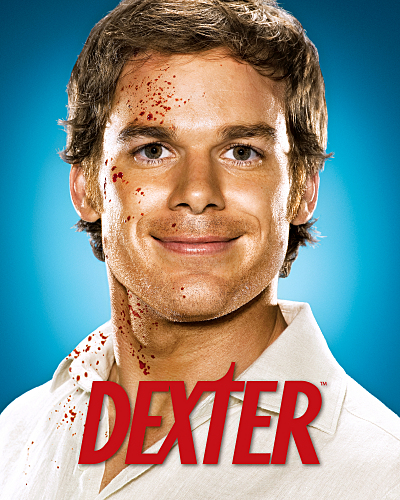
And then I watched an episode of Dexter and had second thoughts.
Killing people makes Dexter come alive (at least in the first season). While this makes for great television (my friend is a writer on the show) it begs a bigger question...
"Don't ask what the world needs. Ask yourself what makes you come alive and then go and do that..."
I doubt Harold would give the same advice to Dexter. Or, more likely, Harold would expand the conversation to discuss how killing people doesn't really make Dexter come alive. He'd probably say that there's something more to life than Dexter has discovered.
And thus starts the dialogue:
What does it mean to be fully alive?
And do we ask ourselves the same question Dexter should when we read Harold's quote?
I mean, sure, we're not murderers. So at least we have that going for us.
And I know that it's possible for me to be fully alive being a writer, or an executive or teacher or musician...
...or is it?
Is there something more to life than doing what you love?
Because it seems like Harold's quote was penned far from adults who can't read because they've never been to school. My sense is that this quote was conceived in another world where no one dies from dehydration, curable disease or malnutrition. It has become famous in a culture where most can read, most have plenty to eat and most will die of old age.
This quote is on t-shirts, bumper stickers and religious books in this land where the most common form of suffering is experienced by the lonely artist, the apathetic student or the bored businessman.
Now, I know existential suffering is hard. It's hard for everyone. But could it be that the cure for our existential pain isn't simply to do what we love, but to become a humanity which loves people more than what we do?
What I still love about Harold's quote is that it gives people hope that life is possible. We need people to remind us of that. We need that stirring in our hearts that life can be incredibly rewarding, fulfilling and vibrant.
And perhaps there is no greater thrill than doing what we love.
But we also need people to remind us that there is more to life than finding our bliss, and that it's possible for us-- all of us-- to find our bliss by meeting the needs of others.
Maybe what the world needs, more than for you to come alive...
Is for you to become the kind of person who's alive by meeting the needs of the world.




 Posts
Posts

